The problem of achieving a sustainable society can be seen as a
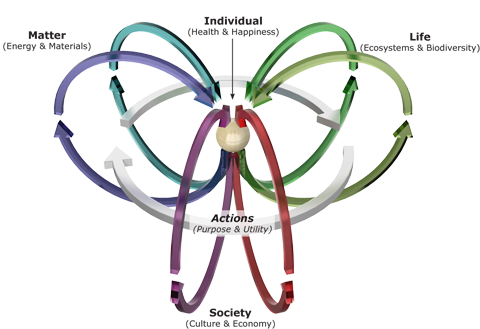
multi-faceted prism, with each face representing a different category
of concern (material and energy use, societal well-being, economics,
etc.).
Many of today’s sustainable design solutions focus on just one
or two of the facets meaning that they inevitably miss parts of the
problem and deliver a sub-optimal set of recommendations. For example,
lower carbon impact is frequently traded for greater human or
ecological impact. This cannot be considered sustainable.
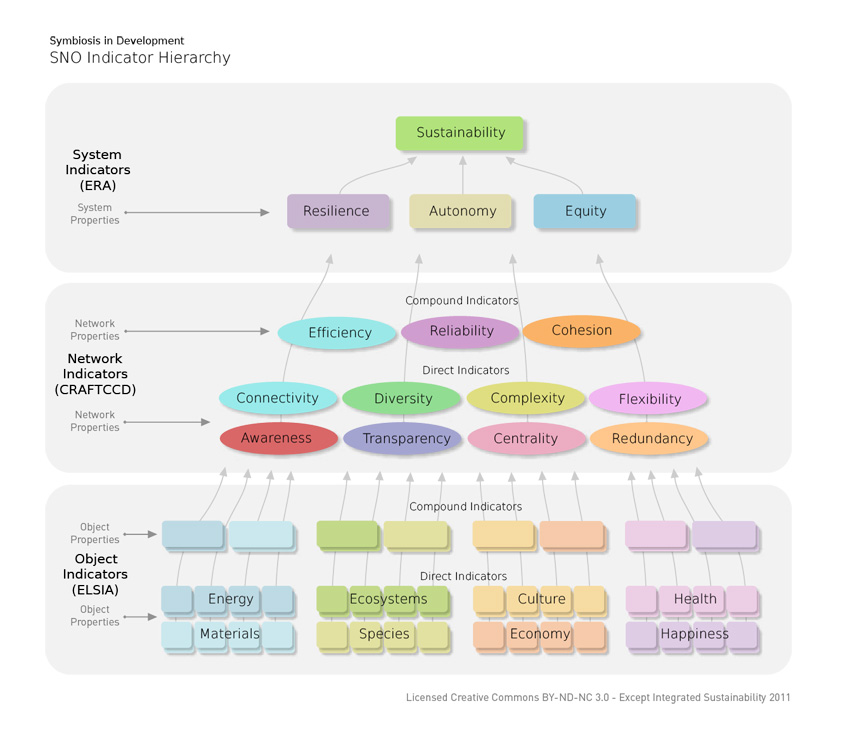
SiD changes this by not only providing ways to build comprehensive and integrated indicator sets, but it goes beyond mere physical based sustainability and creates understanding about sustainability on a system-level, though time, space and context.
SiD is a flexible methodology that allows itself to be
adjusted to the needs of any project.
It has a modular structure that allows the particulars of any given
challenge to be completely integrated. Symbiosis in Development also allows
the inclusion of the limited-domain tools currently used for certain
evaluations or certifications, such as LEED, LCA, Cradle 2 Cradle, and
BREEAM. These tools take on greater meaning when applied in the context
of broader issues, leading to conclusions that they would not have
revealed if they had been used on their own.
SiD
consists of three core components:
The SiD Theory
The
SiD theory lays the foundation for its operation, ethics and reasoned
approach. It deals with approaching problems on a system level
primarily and achieving sustainable cycles in that system. It expands
into environmental ethics, network theory and other necessary
components.
The SiD Method
The
SiD Method consists of a detailed step-by-step approach to system-level
goalsetting, analysis of systems, optimization and system
level
synthesis and evaluatation.
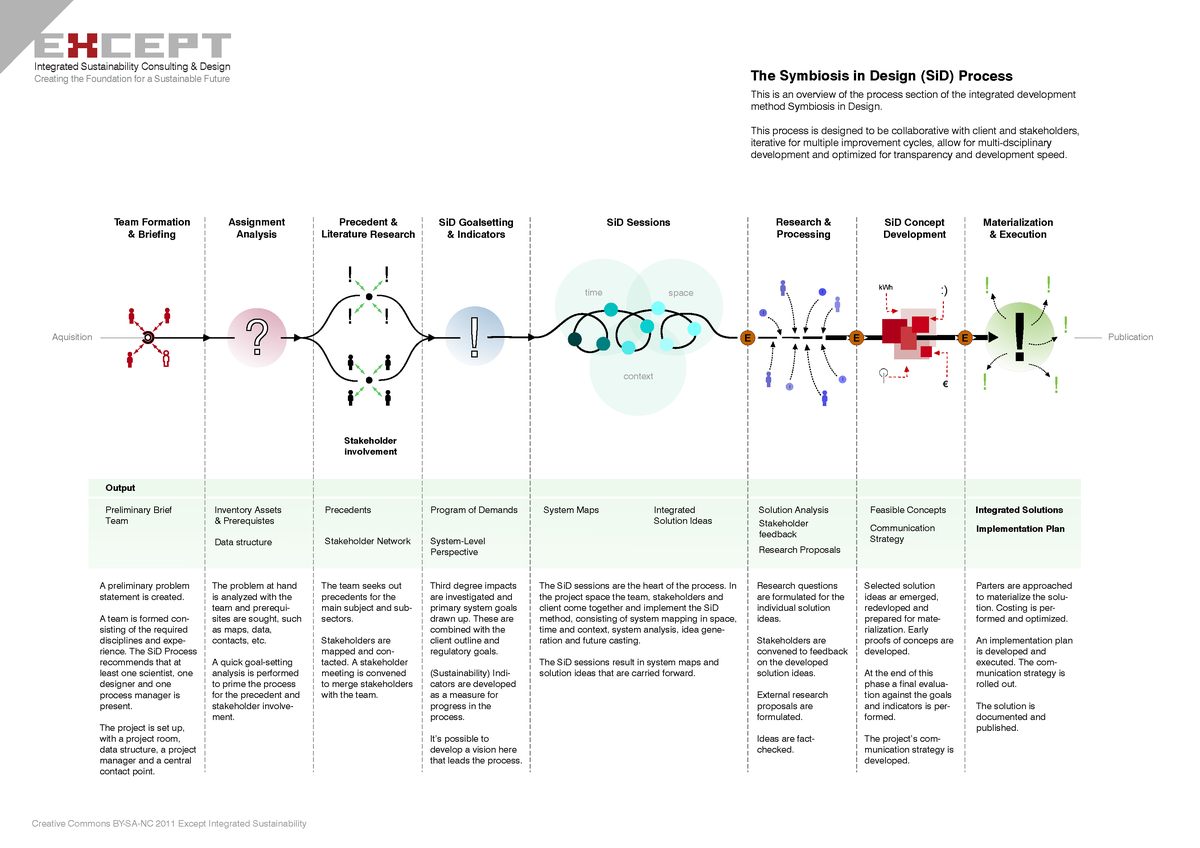
The SiD Process
The
SiD Process details how the method is unfolded in time and how
different disciplines come together to work on a problem together,
including stakeholders and potential third parties. The SiD process
combines bottom-up as well as top-down approaches at the
same
time in an iterative and collaborative working environment.
Three dimensions
SiD recognises the need to investigate systems in context, time and
space simultaneously. Several tools help to develop this perspective
both in a creative and an analytical assement way.
Three
levels of impact
SiD recognises three levels of impact: a direct, first degree level, an
indirect , secondary level, consisting of life cycle effects and others
and a third level, which we call the system level. SiD tries to
optimize the third level effects first as these are in most cases
several orders of magnitude more impactful than second or first level
effects.
Here at Except,
we
are in an ongoing process of using and refining SiD. We use SiD not
only to develop projects but also to develop new or expand upon
existing methodological tools. For instance, it can be used to derive
comprehensive sets of integrated sustainability indicators for tools
such as Life Cycle Assessment (LCA).
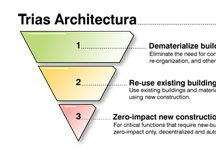
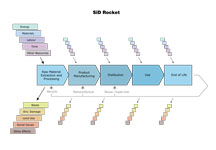
We've published a
few of the tools developed for and with SiD below for illustration
purposes, among which the Trias
Architectura, SiD
Life Cycle Rocket and the ELSIA
Relationship system.
These are covered
under the Creative Commons BY-SA license.
|